Orfeo Son Io
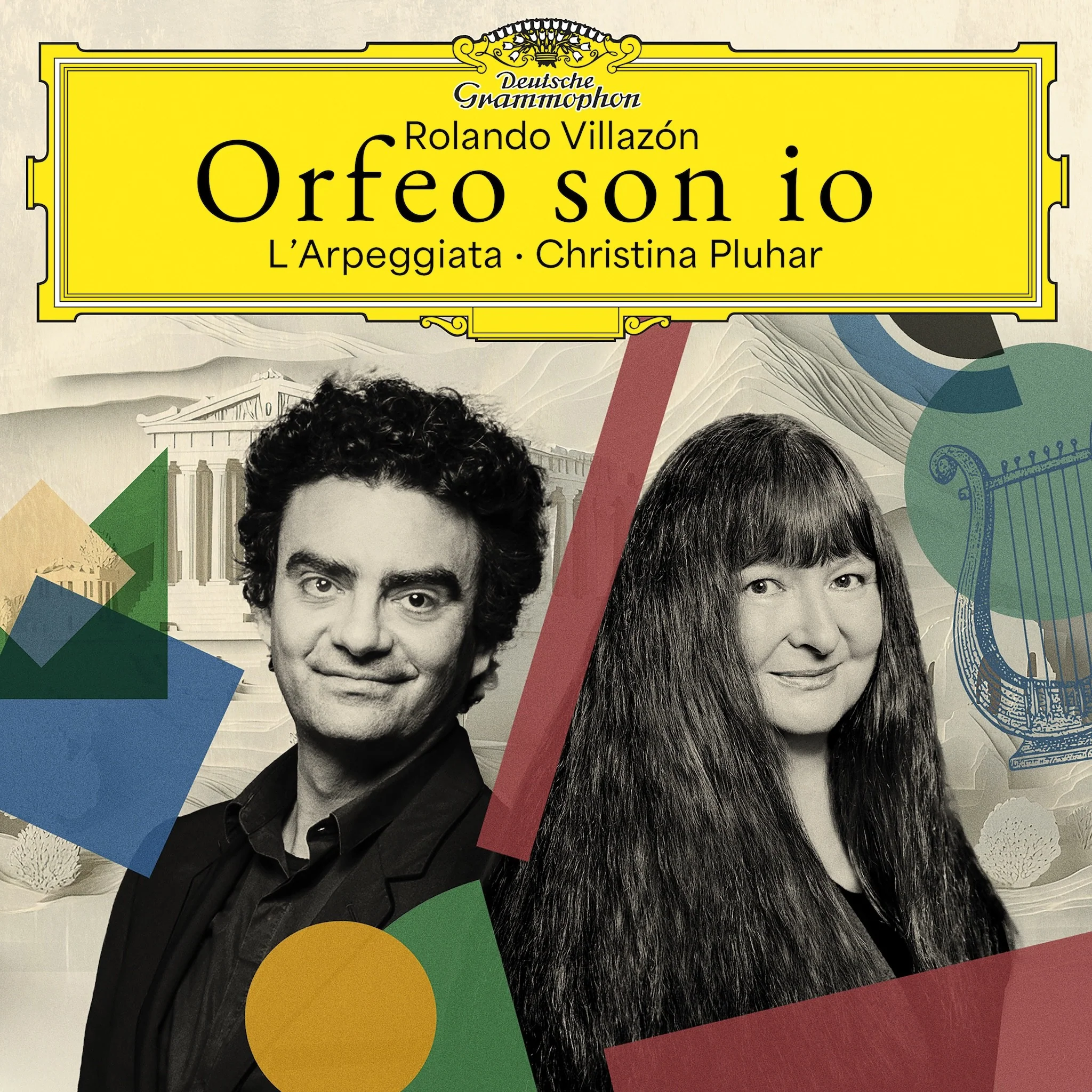
Deutsche Grammophon artist Rolando Villazón has joined forces with early music ensemble L’Arpeggiata and its founder-director Christina Pluhar to record Orfeo son io (“I am Orpheus”), an album inspired by Greek mythology. The recording is based on a conceptual programme devised by Pluhar which the artists have also performed live to great acclaim. Villazón sings excerpts from Monteverdi’s Orfeo and operas on the same subject by Gluck, Peri and Sartorio, as well as 20th-century songs by Carlos Gardel and Luis Bonfá. Directed by Pluhar from the theorbo or Baroque harp, L’Arpeggiata also weave instrumental works by Allegri, Buonamente, Caccini, Cazzati and Priuli into their Orpheus narrative.
Rolando Villazón first worked with Christina Pluhar and L’Arpeggiata when he made his role debut as Monteverdi’s Orfeo in a concert performance at the Musikfest Bremen in 2016. The success of their collaboration resulted in numerous other performances around Europe.
In 2021, the artists reunited to premiere Pluhar’s Orfeo son io programme, again at the Musikfest Bremen, and again leading to further acclaimed concerts together. Squaring the circle, in January this year Villazón, as Artistic Director of the Salzburg Mozartwoche, invited his friends to be part of director and puppeteer Nikolaus Habjan’s new production of Orfeo – another huge success.
“In Orfeo son io,” explains Pluhar, “we’ve decided to let Orpheus tell his own story, without any help from Eurydice, the Messenger, Charon, and so on. Instead, we’ve chosen instrumental pieces to depict characters, places, or states of mind. Priuli’s Sonata prima à due cori expresses the news of Eurydice’s death, Buonamente’s Intrada symbolises the entrance to Hades guarded by Charon, the ‘walking bass’ of Cazzati’s Capriccio sopra 12 note evokes the couple’s steps as they try to leave the Underworld…”
“Meanwhile,” she adds, “in an inner journey of the soul, Orpheus tells us about falling in love, the huge joy of his wedding day, the terrible grief unleashed by Eurydice’s death, his desire to save her, and his final farewell to her.”
Accompanied by L’Arpeggiata, Villazón brings Orpheus vividly to life. He conveys every emotion the character experiences with beauty and sincerity – from the joy of Monteverdi’s “Vi ricorda, o boschi ombrosi” to the sorrow of “Che farò senza Euridice” from Gluck’s Orfeo ed Euridice or Gardel’s Sus ojos se cerraron, which the tango star sang in the 1935 film El día que me quieras as his character mourns his dead wife (“Her eyes closed, and the world kept on turning…”).
Tracklisting:
1. Brunelli: Non havea Febo ancora (Arr. Pluhar) [Scherzi, Arie, Canzonette e Madrigali, Op. 10]
2. Caccini: Al canto, al ballo [L'Euridice, Scene 2]
3. Monteverdi: Rosa del ciel [L'Orfeo, SV 318, Act I]
4. Monteverdi: Vi ricorda, o boschi ombrosi [L'Orfeo, SV 318, Act II]
5. Allegri: Canario [Quinto Ballo detto lo Ninfe di Senna]
6. Priuli: Sonata prima à due cori [Sacrarum concentuum]
7. Monteverdi: Tu se' morta [L'Orfeo, SV 318, Act II]
8. Buonamente: Intrada à 6 [Sonate et canzoni]
9. Monteverdi: Sinfonia – Possente spirto [L'Orfeo, SV 318, Act III]
10. Monteverdi: Toccata per l'arpa [L'Orfeo, SV 318, Act III]
11. Cazzati: Capriccio in Ecco (nella grotta) [Varii, e diversi capricci per camera, Op. 50]
12. Monteverdi: Orfeo son'io [L'Orfeo, SV 318, Act III]
13. Monteverdi: Sol tu, nobile dio [L'Orfeo, SV 318, Act III]
14. Cazzati: Ballo delle Ombre [Trattenimenti per camera, Op. 22]
15. Peri: Gioite al canto mio (Arr. Pluhar) [L'Euridice, Scene 6]
16. Cazzati: Capriccio sopra 12 note [Trattenimenti per camera, Op. 22]
17. Monteverdi: Qual honor [L'Orfeo, SV 318, Act IV]
18. Sartorio: Rendetemi Euridice [L'Orfeo, Act III]
19. Gluck: Mille pene [Orfeo ed Euridice, Act II]
20. Gluck: Che farò senza Euridice? (Arr. Pluhar) [Orfeo ed Euridice, Act III]
21. Gardel: Sus ojos se cerraron (Arr. Pluhar)
22. Bonfá: Mañana de Carnaval [Black Orpheus]
Original: $18.99
-65%$18.99
$6.65Produktinformationen
Produktinformationen
Versand & Rückgabe
Versand & Rückgabe
Description
Deutsche Grammophon artist Rolando Villazón has joined forces with early music ensemble L’Arpeggiata and its founder-director Christina Pluhar to record Orfeo son io (“I am Orpheus”), an album inspired by Greek mythology. The recording is based on a conceptual programme devised by Pluhar which the artists have also performed live to great acclaim. Villazón sings excerpts from Monteverdi’s Orfeo and operas on the same subject by Gluck, Peri and Sartorio, as well as 20th-century songs by Carlos Gardel and Luis Bonfá. Directed by Pluhar from the theorbo or Baroque harp, L’Arpeggiata also weave instrumental works by Allegri, Buonamente, Caccini, Cazzati and Priuli into their Orpheus narrative.
Rolando Villazón first worked with Christina Pluhar and L’Arpeggiata when he made his role debut as Monteverdi’s Orfeo in a concert performance at the Musikfest Bremen in 2016. The success of their collaboration resulted in numerous other performances around Europe.
In 2021, the artists reunited to premiere Pluhar’s Orfeo son io programme, again at the Musikfest Bremen, and again leading to further acclaimed concerts together. Squaring the circle, in January this year Villazón, as Artistic Director of the Salzburg Mozartwoche, invited his friends to be part of director and puppeteer Nikolaus Habjan’s new production of Orfeo – another huge success.
“In Orfeo son io,” explains Pluhar, “we’ve decided to let Orpheus tell his own story, without any help from Eurydice, the Messenger, Charon, and so on. Instead, we’ve chosen instrumental pieces to depict characters, places, or states of mind. Priuli’s Sonata prima à due cori expresses the news of Eurydice’s death, Buonamente’s Intrada symbolises the entrance to Hades guarded by Charon, the ‘walking bass’ of Cazzati’s Capriccio sopra 12 note evokes the couple’s steps as they try to leave the Underworld…”
“Meanwhile,” she adds, “in an inner journey of the soul, Orpheus tells us about falling in love, the huge joy of his wedding day, the terrible grief unleashed by Eurydice’s death, his desire to save her, and his final farewell to her.”
Accompanied by L’Arpeggiata, Villazón brings Orpheus vividly to life. He conveys every emotion the character experiences with beauty and sincerity – from the joy of Monteverdi’s “Vi ricorda, o boschi ombrosi” to the sorrow of “Che farò senza Euridice” from Gluck’s Orfeo ed Euridice or Gardel’s Sus ojos se cerraron, which the tango star sang in the 1935 film El día que me quieras as his character mourns his dead wife (“Her eyes closed, and the world kept on turning…”).
Tracklisting:
1. Brunelli: Non havea Febo ancora (Arr. Pluhar) [Scherzi, Arie, Canzonette e Madrigali, Op. 10]
2. Caccini: Al canto, al ballo [L'Euridice, Scene 2]
3. Monteverdi: Rosa del ciel [L'Orfeo, SV 318, Act I]
4. Monteverdi: Vi ricorda, o boschi ombrosi [L'Orfeo, SV 318, Act II]
5. Allegri: Canario [Quinto Ballo detto lo Ninfe di Senna]
6. Priuli: Sonata prima à due cori [Sacrarum concentuum]
7. Monteverdi: Tu se' morta [L'Orfeo, SV 318, Act II]
8. Buonamente: Intrada à 6 [Sonate et canzoni]
9. Monteverdi: Sinfonia – Possente spirto [L'Orfeo, SV 318, Act III]
10. Monteverdi: Toccata per l'arpa [L'Orfeo, SV 318, Act III]
11. Cazzati: Capriccio in Ecco (nella grotta) [Varii, e diversi capricci per camera, Op. 50]
12. Monteverdi: Orfeo son'io [L'Orfeo, SV 318, Act III]
13. Monteverdi: Sol tu, nobile dio [L'Orfeo, SV 318, Act III]
14. Cazzati: Ballo delle Ombre [Trattenimenti per camera, Op. 22]
15. Peri: Gioite al canto mio (Arr. Pluhar) [L'Euridice, Scene 6]
16. Cazzati: Capriccio sopra 12 note [Trattenimenti per camera, Op. 22]
17. Monteverdi: Qual honor [L'Orfeo, SV 318, Act IV]
18. Sartorio: Rendetemi Euridice [L'Orfeo, Act III]
19. Gluck: Mille pene [Orfeo ed Euridice, Act II]
20. Gluck: Che farò senza Euridice? (Arr. Pluhar) [Orfeo ed Euridice, Act III]
21. Gardel: Sus ojos se cerraron (Arr. Pluhar)
22. Bonfá: Mañana de Carnaval [Black Orpheus]